I built Cuey because I needed it myself.

Cuey started with a smaller, more personal problem than any of those: I knew exactly what I wanted to say, and I still couldn't say it naturally once the camera turned on.

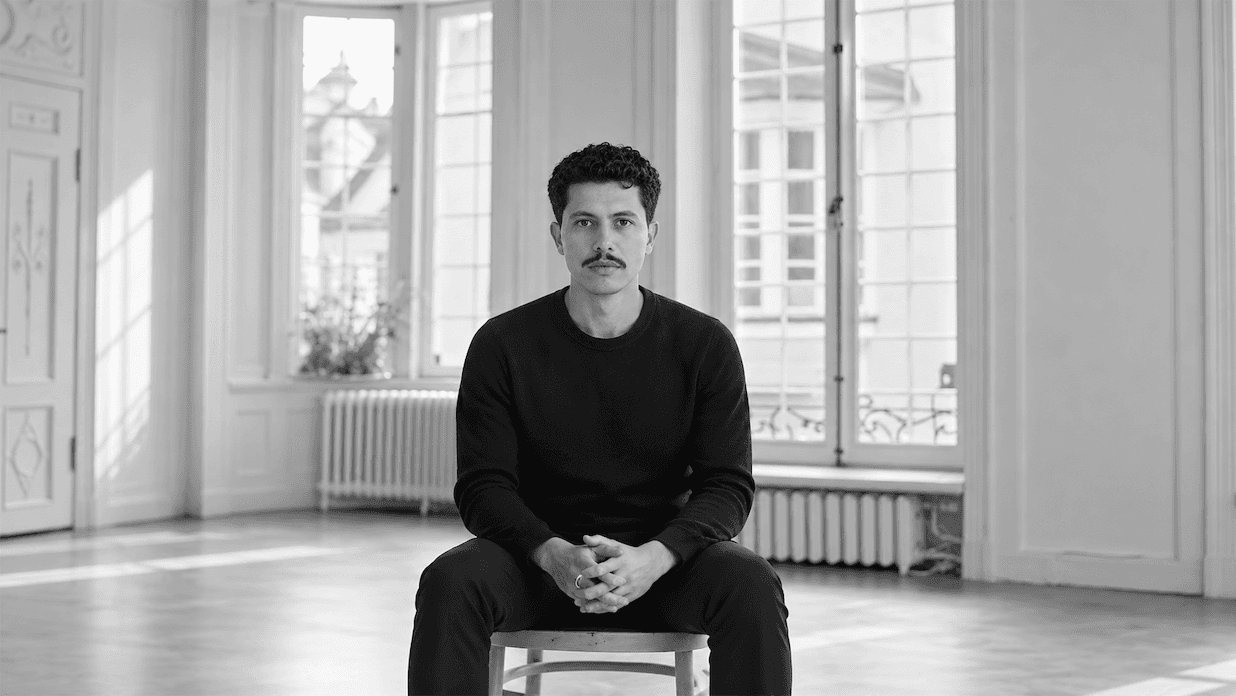
Zakaria Reziki, founder of Cuey, seated in a bright room in Paris

I'm Zakaria Reziki, a product designer based in Paris. Since 2017 I've designed products for startups — before I started building my own.

I've spent most of my career behind the product, not in front of the camera.

I trained as a UX designer and started working in 2017, at a startup studio in Paris called Kamet Ventures. A studio doesn't build one product — it builds several at once, testing which ones deserve to exist. I moved between them, doing the early design work each one needed to get in front of its first users.

From there I went deeper: a single product team, then a game studio, then working independently with founders directly. Different products, different problems, but the same job underneath — take something complicated and make it feel obvious to use.

Building was the easy part. Talking about what I built wasn't.

I love building things. I've spent years thinking about how products should work — how to remove friction, simplify a workflow, make an interface feel like it isn't there.

But when I started building on my own, I ran into a different problem. A good product doesn't automatically find an audience. I had to explain what I was building. Publish. Demonstrate. Teach.

Increasingly, that meant turning on a camera and talking. That's where I struggled. I could know exactly what I wanted to say and still lose the words the moment recording started.

So I tried a teleprompter.

Scripts helped me remember what I wanted to say. But they introduced a different problem: when the words sat too far from the camera, my eyes gave it away. I wasn't talking to the viewer anymore. I looked like I was reading.

And most teleprompter software added more interface when what I actually wanted was less — more windows, more settings, more things to configure before I could just talk.

“The best teleprompter isn't the one people notice. It's the one they don't realize you're using.”

I wrote up the apps I tested, and what kept going wrong, in I tested about ten Mac teleprompter apps.

So I built the teleprompter I wanted to use.

Cuey is a teleprompter designed specifically for Mac. The idea behind it is simple: keep your words close to your camera, so you can follow a script while still looking like you're talking to the person on the other end.

I built it to feel like a small native Mac utility, not a production tool. Open it from the menu bar, paste your script, start talking. No accounts, no setup, nothing between you and the camera that doesn't need to be there.

Years of product design changed how I think about software.

Good software isn't defined by how many features it contains. It's defined by how little friction remains between someone and what they're trying to do.

That's the standard I held Cuey to. Where the controls sit. How fast it opens. How close the text can get to the camera. How much of the interface disappears the moment you don't need it. None of that shows up in a feature list, but it's the difference between a tool that helps and one that gets in the way.

Cuey is still being built.

It's an independent product. There's no company between the people using it and the person building it — if something feels wrong, I want to hear about it. If an idea would genuinely make Cuey better, I want that conversation.

Some of the best products I've worked on were shaped by conversations between the people building them and the people using them. I want Cuey to work the same way.

“He has a real product sense and a strong UX/UI culture — moving naturally from idea to simple, effective interfaces. He knows how to get to the essential: framing the right problems, clarifying assumptions and iterating fast on testable solutions.”
Benoît Pastorelli — Co-founder & CEO, Continuity — worked with Zakaria at Kamet Ventures (translated from French)
“I had the pleasure of working with Zak at Life Beyond Studios, where he contributed to several key initiatives, including the launch of the NFT marketplace. He has a strong ability to turn complex Web3 concepts into clear and intuitive user experiences.”
Kartikeya Behl — Senior Social Media Manager, Jagex — worked with Zakaria at Life Beyond Studios
“Zak is a hardworking, ambitious product designer who always wanted to go further than what was asked of him. I especially appreciated his entrepreneurial instinct — he genuinely cares about the product, the business and the impact of what he designs.”
Camille Biessy — Head of Product, Mendo — managed Zakaria at Kamet Ventures (translated from French)
“Very solid, with real product thinking and a good eye for UI/UX — able to turn vague problems into clear, effective user journeys, always attentive to the details of the experience.”
Pierre Mallein — Freelance Lead Product Manager — managed Zakaria at Kuddos Studio (translated from French)

If speaking naturally on camera has ever felt harder than it should, you're not alone.

Cuey was built for you because it was originally built for me.

Native Mac app · macOS 14 or later

Or learn how Cuey works.

Zakaria Reziki

Founder & Product Designer, Cuey

Paris, France

Say it to the camera.
Not to your notes.

Native Mac app · macOS 14 or later

We use analytics (Plausible, and optionally Google Analytics) only if you accept below. Paddle, our checkout provider, may set cookies when you start a purchase. See our Privacy Policy.